Temperature
Seasonal Temperature Outlook: March-May 2021 (MAM)
Issued: 26 Feb 2021
For MAM 2021, an increased chance of above-normal temperature is predicted over the equatorial region, while below- to near-normal temperatures are favoured over much of eastern Mainland Southeast Asia.
For MAM 2021, all three models – NCEP, ECMWF and UK Met Office (Figures 1-3) – predict an increased chance of above-normal temperature for much of the equatorial region, in particular Sumatra, Borneo, Sulawesi and Papua. Near-normal temperature is predicted for the Malay Peninsula as seen in the multi-model ensemble (Figure 4). Elsewhere in the Maritime Continent, the model’s predictions are mixed. For Java, the NCEP model (Figure 1) is predicting a high likelihood of above-normal temperature, while the ECMWF (Figure 2) and UK Met Office (Figure 3) models are predicting near- to above-normal temperature. For the Philippines, the NCEP and ECMWF models predict above-normal temperature, while the UK Met Office model predicts near normal temperature. The model skill for the above-normal tercile category for the Maritime Continent is moderate to good.
For central and eastern Mainland Southeast Asia, below- to near-normal temperatures are predicted by the three models as seen in the multi-model ensemble (Figure 4). In particular, the UK Met Office model is predicting a higher chance of below-normal temperature for much of eastern Mainland Southeast Asia, while the NCEP and the ECMWF models are predicting mostly near-normal temperature. For Myanmar, the NCEP and the UK Met Office models are predicting above-normal temperature, while the ECMWF model is predicting below- to near-normal temperature. The model skill is low to moderate for Mainland Southeast Asia.
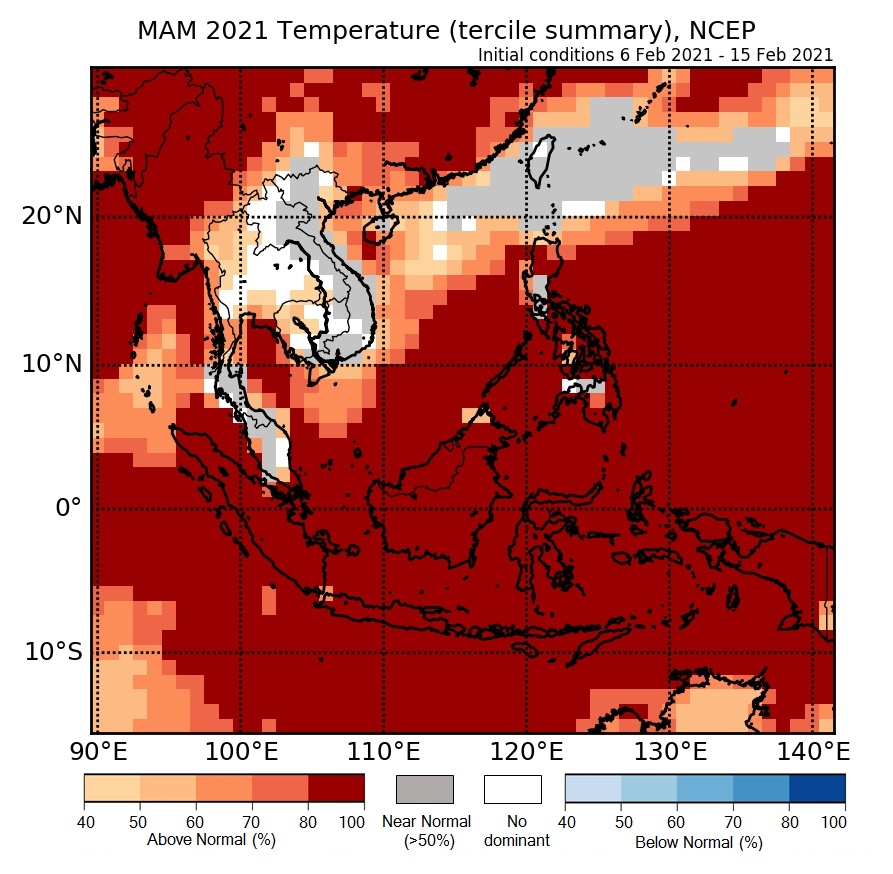
Figure 1: Temperature tercile summary predictions of NCEP model for MAM 2021.
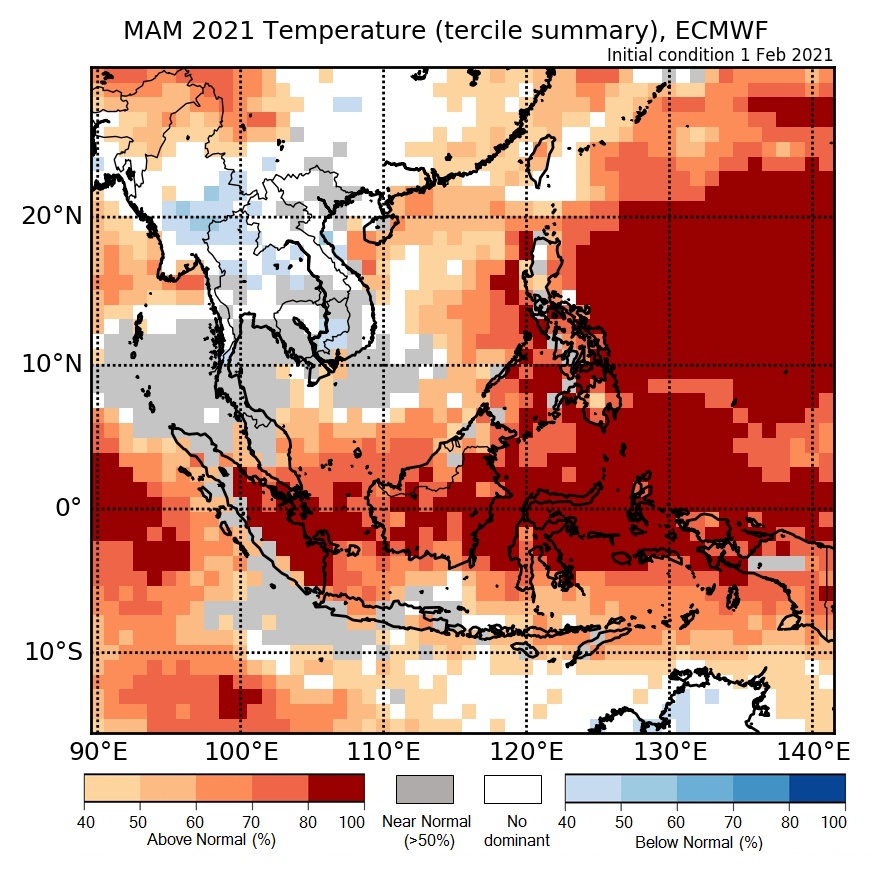
Figure 2: Temperature tercile summary predictions of ECMWF model for MAM 2021 (contains modified Copernicus C3S information).
The qualitative outlook is assessed for the region in general. For specific updates on the national scale, the relevant ASEAN National Meteorological and Hydrological Services should be consulted.