Temperature
Monthly Temperature Outlook: February 2021
Issued: 31 Jan 2021
For February 2021, above-normal temperature is favoured over much of the eastern half of the Maritime Continent and Myanmar, with below- to near-normal temperatures over the rest of Mainland Southeast Asia.
For February 2021, above-normal temperature is predicted over much of the eastern half of the Maritime Continent and Myanmar as seen in the multi-model ensemble (Figure 4). Based on the individual models (Figures 1–3), the highest likelihood is over the Philippines and eastern parts of Indonesia. For Borneo, the ECMWF (Figure 2) and UKMO (Figure 3) models predict a smaller likelihood compared to the NCEP model (Figure 1). The models’ skill for above-normal temperature for the Maritime Continent and Myanmar is moderate to high.
For the rest of Mainland Southeast Asia, the models predict an increased chance of below-normal temperature for parts of Viet Nam, Lao PDR and north-eastern Thailand, although with less chance than in the previous month. The model skill is moderate for below-normal temperature for these regions.
For the western half of the Maritime Continent, there is disagreement between the models. The ECMWF model (Figure 2) predicts near-normal temperature for much of this region, while the UKMO model (Figure 3) predicts temperature to more likely be above-normal. The NCEP model (Figure 1) is between these two models, predicting near-normal temperature for the region around Java, and above-normal elsewhere. Model skill is low to moderate for much of the western half of the Maritime Continent, apart from the region around Java where it is moderate to relatively high.
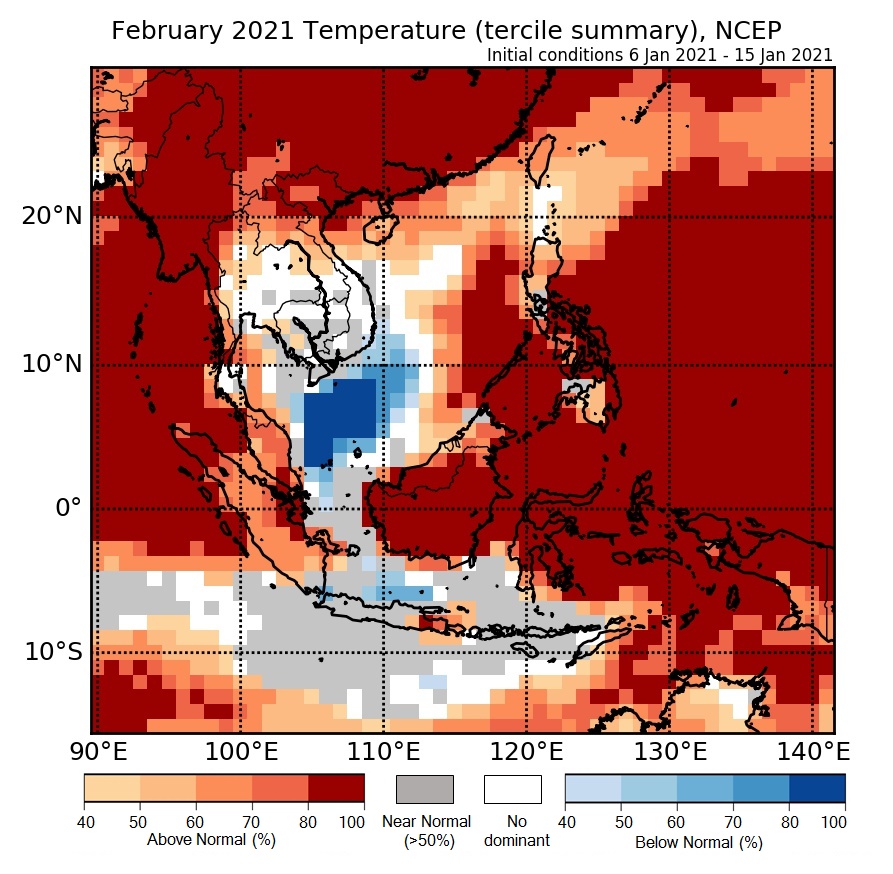
Figure 1: Temperature tercile summary predictions of NCEP model for February 2021.
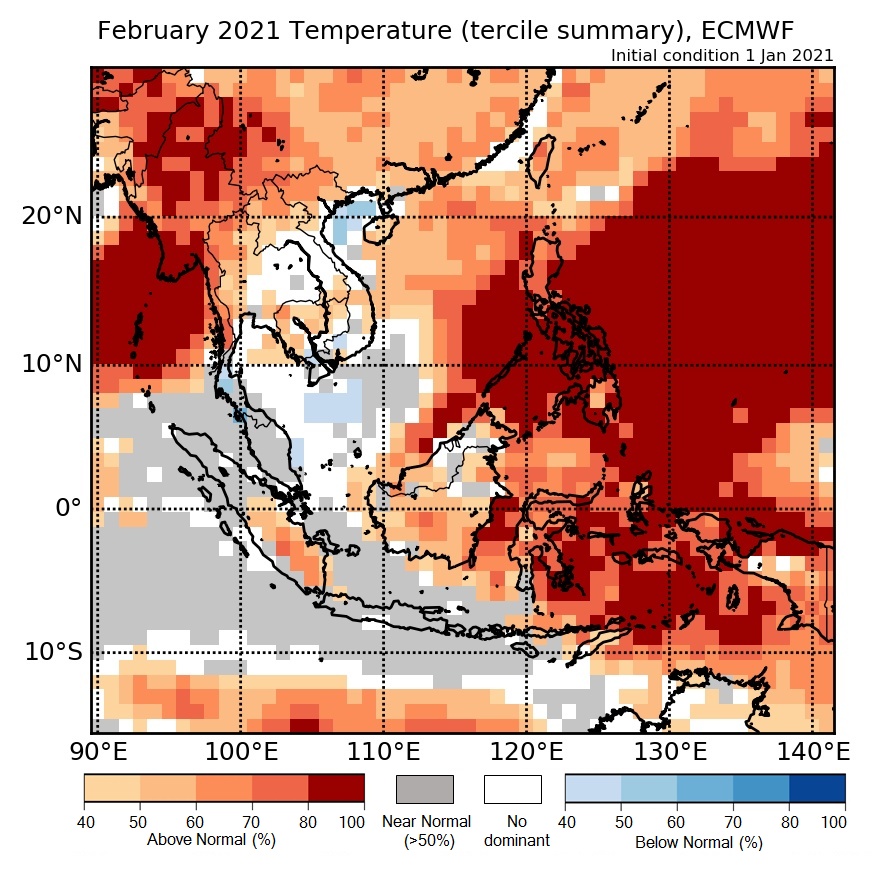
Figure 2: Temperature tercile summary predictions of ECMWF model for February 2021 (contains modified Copernicus C3S information).
The qualitative outlook is assessed for the region in general. For specific updates on the national scale, the relevant ASEAN National Meteorological and Hydrological Services should be consulted.