Rainfall
Seasonal Rainfall Outlook: March-May 2026 (MAM)
For MAM 2026, above-normal rainfall is predicted over most of the northeastern Maritime Continent and below-normal rainfall for much of the rest of the Maritime Continent.
For MAM 2026, an increase in chance of above-normal rainfall is predicted for most of the northeastern Maritime Continent, with an increased chance of below-normal rainfall for most of the rest of the Maritime Continent, based on the multi-model ensemble (Figure 1). For above-normal rainfall, most models (more than six models) agree for the region of higher confidence, with some models (4 – 6 models) predicting above-normal rainfall for the rest of the region. For below-normal rainfall, most models (more than six models) are in agreement for the central and southwestern Maritime Continent, with at least some of the models (4 – 6 models) agreeing for the rest of the region. Model skill is good over the northeastern Maritime Continent for predicting above-normal rainfall, and moderate to good for below-normal rainfall elsewhere over the Maritime Continent.
For Mainland Southeast Asia, near-normal rainfall and no dominant tercile are predicted for most of the region, with below-normal rainfall for the northwestern parts of the region. Model skill is moderate to good for central and southern Mainland Southeast Asia, and low for northern Mainland Southeast Asia.
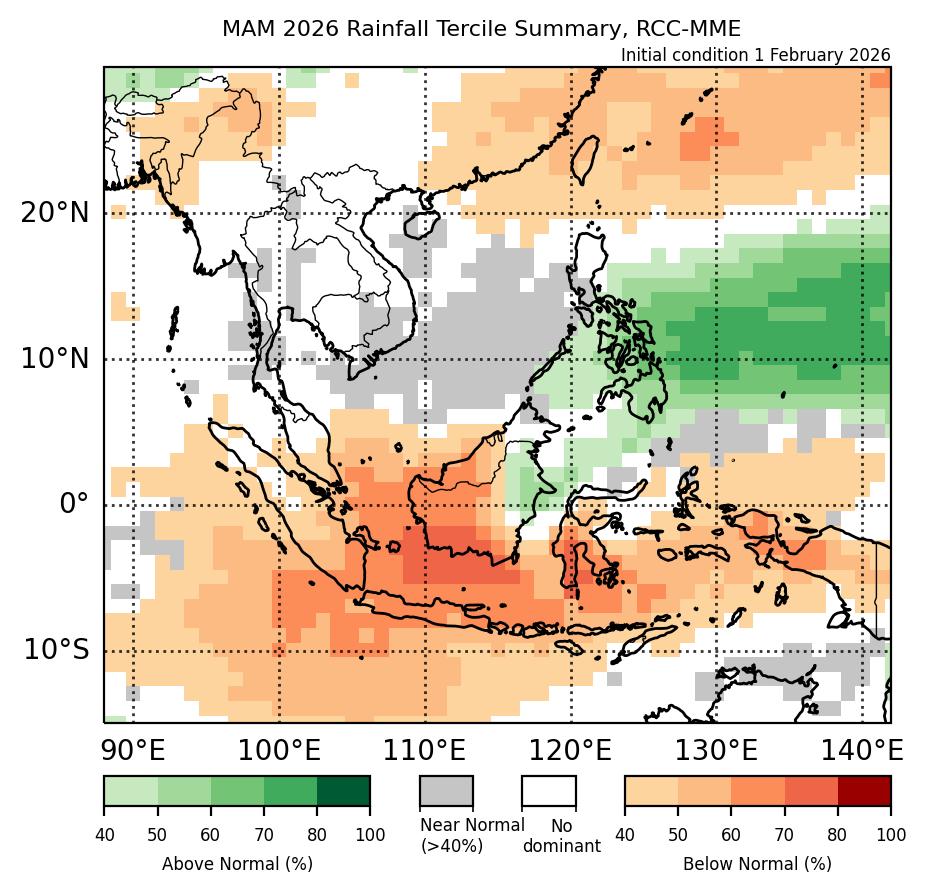
Figure 1: Rainfall tercile summary predictions of the multi model ensemble for MAM 2026 (contains modified Copernicus C3S information).
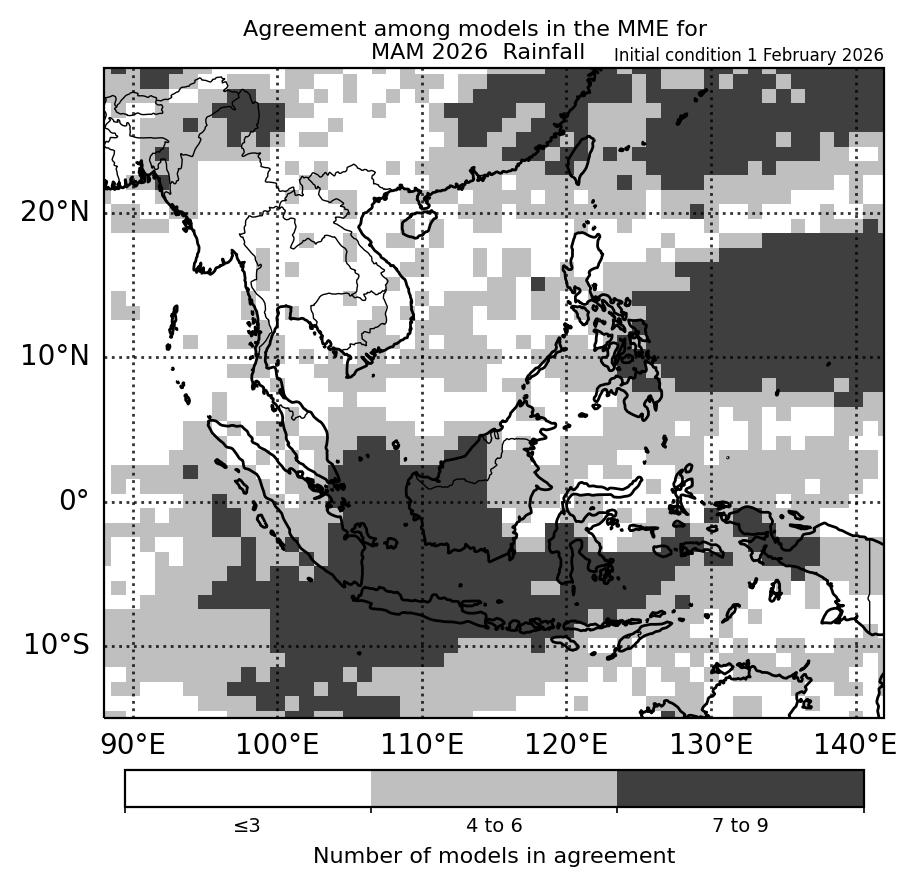
Figure 2: Number of models in agreement in the multi-model ensemble for the dominant tercile for MAM 2026. Where there is no dominant tercile, it refers to the number of models with near-normal tercile (contains modified Copernicus C3S information).

Figure 3: Average climatological rainfall's lower tercile boundary for MAM based on CHIRPS (Reference period: 1991-2020).

Figure 4: Average climatological rainfall's upper tercile boundary for MAM based on CHIRPS (Reference period: 1991-2020).
The qualitative outlook is assessed for the region in general. For specific updates on the national scale, the relevant ASEAN National Meteorological and Hydrological Services should be consulted.