Bulletin
September 11, 2020
ASMC
ASMC Bulletin (Issue #6, Sep 2020)
Highlights
- In the first-half of 2020,
- The Indian Ocean Dipole (IOD) returned to the neutral phase after a strong, positive episode in the second half of 2019.
- El Niño Southern Oscillation (ENSO) was also in a neutral state as predicted. Thus, neither a significant ENSO nor IOD event was present to influence the northern ASEAN region’s fire hotspot count, which was similar to that of 2019.
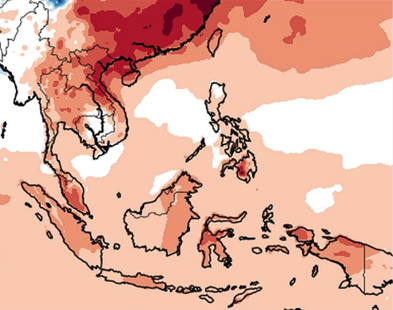
- In the absence of a significant ENSO or IOD event, the influence of climate change on sea-surface temperatures was more visible, while other sources of shorter-term variability drove weather patterns in the region. For example, the heavy rainfall events in East Java (Indonesia), central Myanmar, and northern Viet Nam.
- On the other hand, Thailand experienced a prolonged dry period which extended into early 2020 despite a weakening IOD, and southern Philippines experienced drought which could be attributed partly to a less active tropical cyclone season.
- For the period September 2020 to February 2021,
- Models predict a high likelihood of neutral IOD conditions but favoured the development of La Niña conditions by the last quarter of 2020.
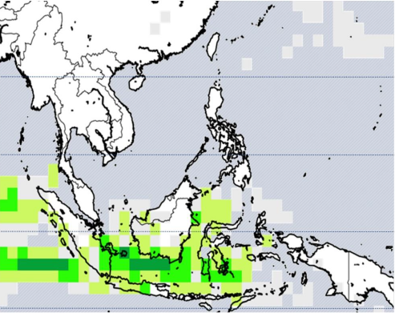
- In line with the possibility of a La Niña development, wetter conditions are predicted by models over parts of Southeast Asia, particularly over the equatorial region.
CLIMATE REVIEW (JAN-JUN 2020): Neutral ENSO, and return to neutral IOD
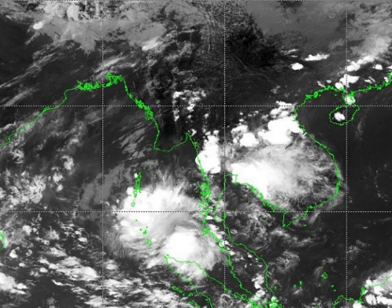
REGIONAL FIRE AND HAZE SITUATION (JAN-JUN 2020): Widespread smoke haze over the Mekong sub region
CLIMATE AND HAZE OUTLOOK (SEP 2020-FEB 2021): Signs of La Niña development
Significant Weather Events in Southeast Asia